Showing posts with label protein. Show all posts

Thursday, 1 October 2020

How Soypro helping in better concentration and focus for kids

How many of you have watch this documentary before?

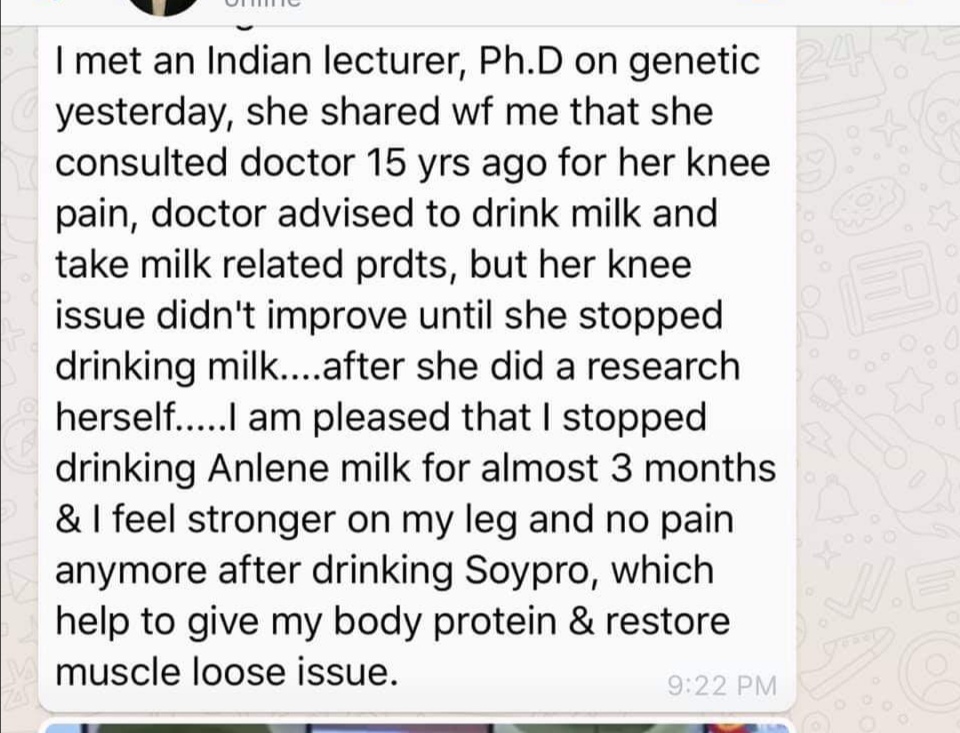
Strongly encourage you to watch, together with your kids too. Now it is via a research to tell us the link between the food we eat dairy - not only can impact our health but on our brain, on how we think, how we behave too. What our brain requires is high plant based protein, not the high oil, high sugar loaded food.

Blessed to have the healthy breakfast solution from Dr Chen - Soypro, so we can start of our day with high plant based protein from wholesome Soy & jilin ginseng :)


Take a look on these recent sharing from clients who has benefitted from NI food nourishment :)


Do contact me if you like to start your day with hassle free yet healthy Soypro breakfast too :)


Jinny Lim

Excellence Lifestyle Coach

Mobile number: +65-92963562

Follow me on my FB & IG too!

FB: https://www.facebook.com/lim.jinny.7

IG: jinny_923


Sunday, 21 June 2020

Soypro testimonials

Let's hear what our clients have benefited from Soypro - when they take care their body by start their day with Soypro :)

Before that, let's recap why Soypro as our healthy breakfast!


Your body will thank you when you give your body the right nutrients to start the day:


Contact me today to get your Soypro this month!


Jinny Lim
Excellence Lifestyle Coach
Mobile number: +65-92963562

Follow me on my FB & IG too!
IG: jinny_923

Saturday, 2 May 2020

Demand for plant-based protein foods is surging in Asia. That is because of suspicion over possible links between wild animal meat and COVID-19.

Have you watch this news before? -->

Demand for plant-based protein foods is surging in Asia. That is because of suspicion over possible links between wild animal meat and COVID-19.

However, is Plant Based meat burger healthier?

Thankfully we have Dr.Chen and Dr.EE here with us to always enlighten us with correct health knowledge.


Many people have a misconception that anything plant-based is automatically healthy. That is not the case. Compared to meat-based burgers, these plant-based burgers are neither healthier nor lower in calories. In the article, it mentioned about oil & sodium content which causing more health problems in future if ppl blindly assume it is healthier without much research.

Thus, equip ourselves with correct knowledge then we able to be a wise consumer.

However it is heartening to see the awareness on the downside of animal based protein is rising hence more people are turning to plant based protein.

Click this video to understand more -->: Plant vs Animal 

Yes, plant based protein is healthier and safer IF IT IS IN WHOLESOME FORM, not the highly processed with added chemical stuff and etc.

Likewise, for plant based cooking oil, many might still have misconception thought that plant based oil is healthier option as it is plant based, however it is not the case too.

When come to cooking oil, regardless animal or plant based both have the same calories content which is 1 tbsp ~ 120 calories.

Unless you are using macadamia nut oil (click here), other plant based oil eg olive oil, peanut oil, rapeseeds oil are high in omega 6 which causing our body under chronic inflammation, which leads to many chronic diseases like cardiovascular, chronic fatigue, cancer and etc.

Many never realised that the cooking oil we've been using day in day out is one of the main culprit causing many chronic diseases.

To overcome chronic inflammation, lower down omega 6 content in your daily diet, increase wholesome plant food which is high in anti-inflammatory & omega 3, especially in our breakfast, because after fasting for 6 to 8 hrs what we eat in breakfast, we absorb almost 100% .

Our immune system is working hard to cleanse and repair, repair the damage caused by chronic inflammation while we were sleeping, so right after we wake up in the morning what kind of food we feed them immediately?

High oil high salt food food like cheese, ham, fried bee hoon, nasi lemak, bread, cake or biscuit 😕? or is there any healthier breakfast which is zero calories, zero cholesterol, high anti-inflammatory properties breakfast😀?

Not forgetting our immune system needs quality nutrients to carry on Defense eg covid 19, HFMD viruses, in daytime too.

Breakfast choices is extremely important, ensure breakfast is oil & cholesterol free, high in fibre, high in antioxidants & phytochemicals & quality protein, to help our body combat the chronic inflammation issue. Choose your food, your breakfast wisely, because we are what we eat.

Eat the right breakfast, you will become healthier, wealthier & happier , vice versa.

Our body needs protein, go for plant based protein, go for quality protein from wholesome soy - Soypro.


https://nutritionalimmunologylifestyle.blogspot.com/search/label/soypro
https://nutritionalimmunologylifestyle.blogspot.com/2020/03/there-are-many-types-of-protein.html


Jinny Lim
Excellence Lifestyle Coach
Mobile number: +65-92963562

Follow me on my FB & IG too!
IG: jinny_923

Thursday, 16 April 2020

Why i choose Soypro as my breakfast?

Very simple:

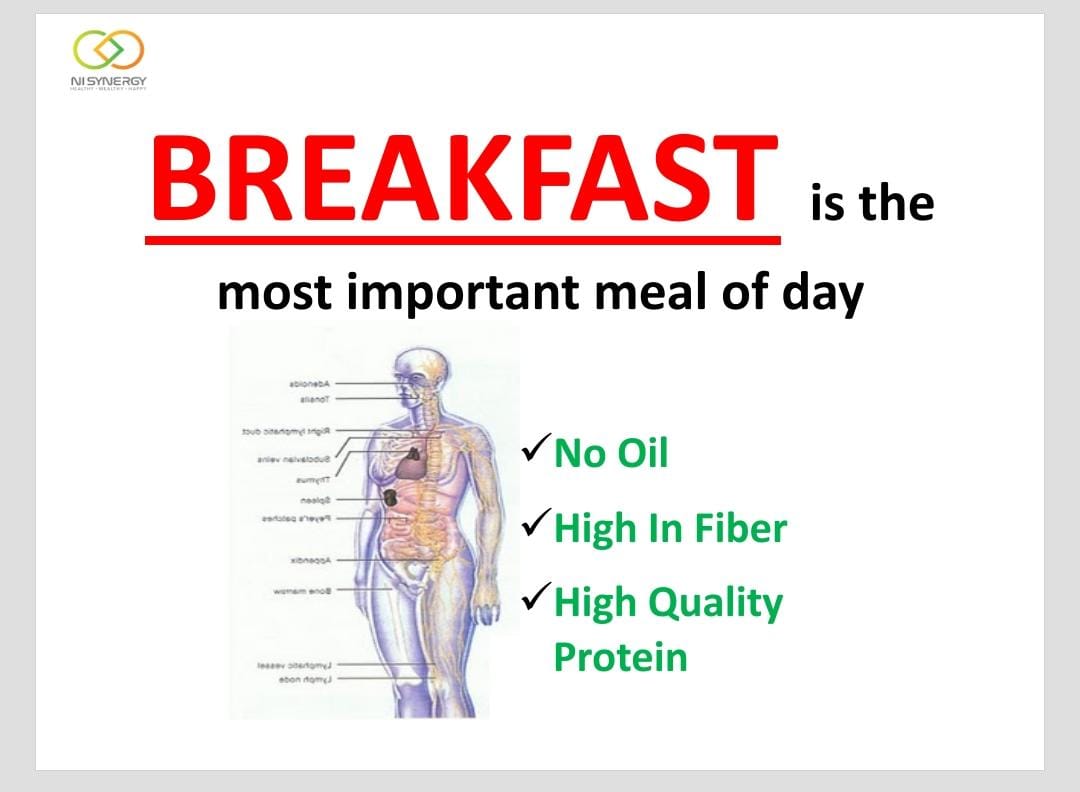
1. Breakfast is the most important meal of the day:

    What you choose to put into your mouth determine your HEALTH 10 to 20 years later, so choose        wisely. & Do not skip breakfast too!!!


2. Choose the RIGHT & NUTRITIOUS breakfast which contains quality protein & fiber, at the same time no animal products, no oil, no cholesterol. Why? Because when our is lack of protein, this may happens.


Soypro is UNIQUE : because it is formulated based the science of Nutritional Immunology
Soypro is Effective : because it is the best food / right nutrients to nourish our immune system
Soypro is SAFE : because wholesome is the best, no preservatives, non-gmo, we done aflatoxins testing,  not whey protein, not soy isolate, not animal base protein & been recognised by Singapore AVA FOOD SAFETY EXCELLENCE AWARD GRADE A for consecutively 15 years :)

Click here: What is Soypro?

Jinny Lim
Excellence Lifestyle Coach
Mobile number: +65-92963562

Follow me on my FB & IG too!
IG: jinny_923

Monday, 30 June 2014

Still drinking cow's milk? Think twice!

Besides depleting calcium from our bones, what else you should be aware of before giving your children, your parents or even yourself a glass of milk daily?

Cow’s milk is custom-designed for calves

Thanks to our creative ingenuity and perhaps related to our ancient survival needs, we adopted the dubious habit of drinking another species’ milk. Nobody can dispute that cow’s milk is an excellent food source for calves. Weighing around 100 pounds at birth, a calf typically gains approximately eight times its weight by the time it is weaned. But unlike humans, once calves are weaned, they never drink milk again. And the same applies to every mammalian species on this planet.

Also, each mammalian species has its own “designer” milk, and cow’s milk is no exception. For example, cow’s milk contains on average three times the amount of protein than human milk which creates metabolic disturbances in humans that have detrimental bone health consequences.

It’s important to bear in mind that mother’s milk is excellent nourishment for human babies, but its composition is very different from cow’s milk.

Scientific studies show that milk increases fracture risk

Many scientific studies contradict the conventional wisdom that milk and dairy consumption help reduce osteoporotic fractures. Surprisingly, studies demonstrating that milk and dairy products actually fail to protect bones from fractures outnumber studies that prove otherwise. Even drinking milk from a young age does not protect against future fracture risk but actually increases it. Shattering the “savings account” calcium theory, Cumming and Klineberg report their study findings as follows:
“Consumption of dairy products, particularly at age 20 years, was associated with an increased risk of hip fracture in old age. (“Case-Control Study of Risk Factors for Hip Fractures in the Elderly”. American Journal of Epidemiology. Vol. 139, No. 5, 1994).
And the 12 year long Harvard Nurses’ Health Study found that those who consumed the most calcium from dairy foods broke more bones than those who rarely drank milk. This is a broad study based on 77,761 women aged 34 through 59 years of age.

In the authors’ own words:
“These data do not support the hypothesis that higher consumption of milk or other food sources of calcium by adult women protects against hip or forearm fractures.” (Source: Feskanich D, Willett WC, Stampfer MJ, Colditz GA. Milk, dietary calcium, and bone fractures in women: a 12-year prospective study. American Journal of Public Health. 1997).

Shocking statistics ignored by mainstream medicine

In the Save Our Bones Program one of the topics I discuss is the complete disregard of scientific evidence that discredits milk and dairy products as the best source of calcium.

One exception is Amy Lanou Ph.D., nutrition director for the Physicians Committee for Responsible Medicine in Washington, D.C., who states that:
“The countries with the highest rates of osteoporosis are the ones where people drink the most milk and have the most calcium in their diets. The connection between calcium consumption and bone health is actually very weak, and the connection between dairy consumption and bone health is almost nonexistent.”
Surprised? You shouldn’t be, because as I mentioned earlier in this article…

Milk is an acidifying animal protein

Like any other animal derived protein-rich food, milk has a positive potential renal acid load (PRAL) which triggers a protective biological reaction to neutralize all the damaging acidic protein before it reaches the kidneys.

The body is designed for survival, so it sacrifices bone density to protect the kidneys and urinary tract because the latter are essential to survival. And the most readily available source of acid neutralizer is in the bones. So even though milk contains calcium, it ends up sapping your bones of that crucial mineral. But that’s not all because…

Today’s milk is a processed food

Until the end of the 19th century in Europe and the beginning of the 20th century in the US, milk was consumed unpasteurized or raw. Later on, homogenization became the industry’s standard. These processes further alter milk’s chemistry and actually increase its detrimental acidifying effects.

Raw milk advocates claim that if cow’s milk is left “as is” it is a healthy and wholesome drink. It is true that raw milk is less acidifying than processed milk and that pasteurization and homogenization may cause a long list of digestive and other health problems, but I still don’t recommend drinking any kind of cow’s milk.

Nowadays, milking cows are given antibiotics and most are also injected with a genetically engineered form of bovine growth hormone (rBGH). A man-made or synthetic hormone used to artificially increase milk production, rBGH also increases blood levels of the insulin-growth factor 1 (IGF-1) in those who drink it. 

And higher levels of IGF-1 are linked to several cancers.

This should not be ignored, especially in view of recent information by Samuel Epstein, MD, Professor of Environmental Medicine at the University of Illinois School of Public Health, and Chairman of the Cancer Prevention Coalition. In an article titled “Monsanto’s Hormonal Milk Poses Serious Risks of Breast Cancer, Besides Other Cancers” (http://www.preventcancer.com/press/releases/july8_98.htm, June 21, 1998) Dr. Epstein concludes that:
“Drinking rBGH milk would thus be expected to significantly increase IGF-1 blood levels and consequently to increase risks of developing breast cancer and promoting its invasiveness.”
Even though organic milk is from cows that are not given antibiotics or rBHG, if you truly care about your bone health and your overall health, you should…

Avoid drinking cow’s milk

As I explain in the Save Our Bones Program and contrary to mainstream recommendations, drinking milk and eating lots of dairy products are not the answer to reversing osteoporosis. And while in the Save Our Bones Program no food is completely off limits, I strongly recommend that you explore the different milk substitute options that I will list for you here.

But first, I’d like to clarify that unsweetened fermented or cultured dairy products such as yogurt, kefir, and sour cream are acid neutral. Yogurt in particular is chock-full of beneficial qualities. As is the case with milk, organic yogurt does not have rBGH, but even several of the most well-known yogurt brands have stopped using the bovine growth hormone (rBGH). You should call your favorite yogurt company to confirm. One more clarification: when I say unsweetened I mean without sugar or any artificial sweetener. However, you can add honey or stevia, a zero calorie plant-derived sweetener that is delicious and alkalizing as well. I like to carry around stevia packets in my purse so that I’m always able to sweeten food or drinks when I’m on the go.


Source: http://saveourbones.com/osteoporosis-milk-myth/

Jinny

92963562

Is cow's milk really good for us?

Is cow's milk really good for us? Do you think cow's milk is for human consumption?

Have you ever ponder about this question before?

Since young, we have been told about the goodness of dairy product, i.e. excellent sources of protein and calcium.

So I always thought that milk is the only good source for protein and calcium, that's why I consumed pregnancy milk powder during my first pregnancy.

However, when I realised that my elder daughter has cow's milk protein allergic I started doing some research on this topic.

Now, let's us start from: Is milk really a good source for calcium?

Do you know that USA has a much high percentage of people getting osteoporosis as compared to Japan? Just simply look at the diet of normal North Americans, their diet is rich in dairy products such as milk, cheese, etc. But why are the North Americans still have a high percentage of osteoporosis patients despite their dairy rich diet?

Why most of the world does not eat dairy products and do not have bone problems and calcium deficiency?

There must be something terribly wrong with the message that milk (and milk products) will give us healthy bones.


Debunking The Milk Myth: Why Milk Is Bad For You And Your Bones

Milk depletes the calcium from your bones

The milk myth has spread around the world based on the flawed belief that this protein and calcium-rich drink is essential to support good overall health and bone health in particular at any age. It is easy to understand that the confusion about milk’s imaginary benefits stems from the fact that it contains calcium – around 300 mg per cup.

But many scientific studies have shown an assortment of detrimental health effects directly linked to milk consumption. And the most surprising link is that not only do we barely absorb the calcium in cow’s milk (especially if pasteurized), but to make matters worse, it actually increases calcium loss from the bones.

What an irony this is!

Here’s how it happens. Like all animal protein, milk acidifies the body pH which in turn triggers a biological correction. You see, calcium is an excellent acid neutralizer and the biggest storage of calcium in the body is – you guessed it… in the bones. So the very same calcium that our bones need to stay strong is utilized to neutralize the acidifying effect of milk. Once calcium is pulled out of the bones, it leaves the body via the urine, so that the surprising net result after this is an actual calcium deficit.

Knowing this, you’ll understand why statistics show that countries with the lowest consumption of dairy products also have the lowest fracture incidence in their population (there’s more on this later).
But the sad truth is that most mainstream health practitioners ignore these proven facts. I know it firsthand because when I was diagnosed with osteoporosis, my doctor recommended that I drink lots of milk in addition to taking Fosamax.

Fortunately, I did neither, because I knew that…

Source: http://saveourbones.com/osteoporosis-milk-myth/


Jinny